Friday, 17 October 2014

President of Haiti


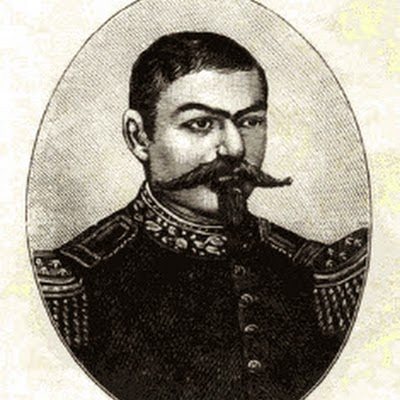
Nicolas Fabre Geffrard was President of Haiti from 1859 -1867. During his presidency many tried to assassinate him.
♦ In the first year of Nicolas's presidency, Guerrier Prophète, began to lay out his plan to overthrow him. Guerrier's plan was overheard by Nicolas's guards and then Guerrier was exiled.
♦ In 1859, Nicolas's daughter was assassinated by Timoleon Vanon. 
♦ In 1861, General Legros tried to take over the weaponry storage but was detained by government forces. 
♦ In 1862, Etienne Salomon encouraged the people in the countryside to fight Nicolas, but Salomon was shot and killed.
 ♦ In 1863, Aimé Legros gathered troops to overthrow Nicolas, but he was shot and killed too. 
 ♦ In 1864, the elite community in Port-au-Prince tried to take over the weaponry storage, but the conspirators were later prosecuted and sentenced to jail. 
Here are some postcards from Port-au-Prince.

♦ In 1867, his bodyguard tried to assassinate him inside the National Palace.
♦ He survived all of the attempts to assassinate him. 
♦ In 1865, Major Sylvain Salnave began his takeover of the North and Artibonite.
♦ Nicolas's troops clashed with the Major's troops. After using the Royal Navy for gunboat diplomacy* with the Major, Nicolas's regime was in ruins, especially financially.


♦ He started fights in the North, West, and South. In 1866, a huge fire destroyed hundreds of homes. The following year Nicolas and his family disguised themselves and fled to Jamaica
♦ He died in Kingston on New Years Eve 1878, aged 72.
* In politics, gunboat diplomacy refers to the pursuit of foreign policy goals through displays of naval power. Showing naval power can both imply or constitute a direct threat of warfare. In America they call it big stick diplomacy.  


Thursday, 16 October 2014

The Coppersmith and His Wife


This print was based on Schleisner's painting 'In the Coppersmiths'


'Vision is the art of seeing what is invisible to others.' - Jonathan Swift


The engraving twists the woman's features. She is given a very pointy chin and nose which intrude further into her husband's personal space. See how a gentlewoman has been rendered witch-like. 

Perhaps the engraver felt that women ought not interfere with men's work. Her assistance seemed suspicious him, or maybe he just didn't like women much. 

He has only made small changes but they change the feeling of the whole image. 


Wednesday, 15 October 2014

An Amateur Concert in the Countryside


The Souls of the Damned


'The Barque of Dante' is by Eugène Delacroix. It was completed for the opening of the Salon of 1822 and currently hangs in the Musée du Louvre, Paris. 

The Lourve's website describes the story behind the painting -

Although inspired by the mythological tradition, the subject of the work is the Italian poet Dante Alighieri (1265-1321). In the Divine Comedy (1306-21), Dante recounts his poetic visit to Hell, guided by Virgil. The Divine Comedy is divided into three parts: Hell, Purgatory, and Paradise. Dante's voyage begins in Hell in the company of the Roman poet, passing through nine successive circles on his way to meet Beatrice, who will guide him through Paradise. In this scene, Dante and Virgil, piloted by Phlegyas, cross the lake surrounding the infernal city of Dis; the souls of the damned writhe in the water, trying to escape their fate by hanging onto the boat.

Delacroix was inspired by his painter friend Theodore Gericault. Delacroix was humble enough to state that his friend's painting 'The Raft of Medusa' was the direct inspiration for 'The Barque of Dante' .

'The Barque of Dante' got bad reviews. People said that there was a lack of visual perfection. 

We see the souls of the damned are whipped by the waves, and the brushwork reflects their suffering. To a modern audience this expressive style is valued much more. The fashion back then was to make things to look very controlled, even when depicting pure desperation. 

 Here is his friend Theodore Gericault's painting 'The Raft of the Medusa' . Gericault completed it when he was 27. 


He was interested in the true story of the French naval frigate Méduse, which ran aground off the coast of today's Mauritania in 1816. At least 147 people were set adrift on a raft. All but 15 died in the 13 days before their rescue. They became cannibals to survive. 

Cannibalism has been said to test the bounds of cultural relativism as it challenges anthropologists 'to define what is or is not beyond the pale of acceptable human behaviour'. It's about the idea that civilisation is not something absolute, but is relative to circumstances. 

Real accounts of the shipwreck made a deep impression on him. The painting itself is based on a scene described by a passenger. They saw a ship on the horizon and tried to signal it, but the ship appeared not to notice them. 

A surviving crew member said 'From the delirium of joy, we fell into profound despondency and grief".

The ship reappeared about 2 hours later and did rescue them then. 

The style of the painting is like a mythology or history painting, but it was of a contemporary news story at the time. 

Gericault wanted to recreate the scene very precisely. He asked the carpenter who made the raft to rebuild it in his studio. He went to the trial of the ship's captain. He also studied the corpses of the men who had drowned, to better inform his painting. 

He wanted the visual information to be true, but also to present it in the history painting style so that it could have greater impact. The bodies form a wave shape.                                                                                                                                     

He was inspired by Caravaggio. Caravaggio was also very interested in death, drama and realism. Here is a painting of a young woman cutting a man's head off with a sword. 


'Judith Beheading Holofernes' 1599 Caravaggio


Monday, 13 October 2014

The Schoolboy


The painting was bought directly from the artist by George Greville, 2nd Earl of Warwick (1746–1816)

When George Greville was a boy, he was painted by Sir Joshua Reynolds too. I love the sense of wonder in this painting. A portrait of a future art collector!


Crocodile